

Mission Summary
In the high-stakes world of tactical performance, intel is everything. Most coffee drinkers operate under the civilian myth that a darker, bitter roast equals a higher caffeine payload. This intel is compromised. This mission report deconstructs the chemical stability of caffeine during the roasting process, explains why density is the ultimate variable in your morning extraction, and reveals why "strength" is often a matter of flavor perception rather than stimulant reality. If you want to optimize your output, you need to understand the science of the bean.
The Bitterness Trap: Why Your Tongue Is Lying to You
We've all been there. You're staring down a 14-hour shift or a high-intensity training session, and you reach for the darkest, oiliest, most carbon-looking bean in the bunker. You think that because it tastes like a campfire and hits your throat like a flashbang, it's packing more heat.
That's the flavor fallacy.
In the coffee world, "strength" is a dual-use term that causes massive confusion in the ranks. To a roaster, strength refers to the concentration of dissolved coffee solids in your cup. To the consumer, strength usually means "how much is this going to kick my brain into gear?"
The bold, smoky, and sometimes charred notes of a dark roast are simply the result of sugars caramelizing and plant fibers carbonizing. It's flavor, not fuel. If you want to master your energy levels, you have to look past the smoke.
The 455°F Threshold: Caffeine's Thermal Armor
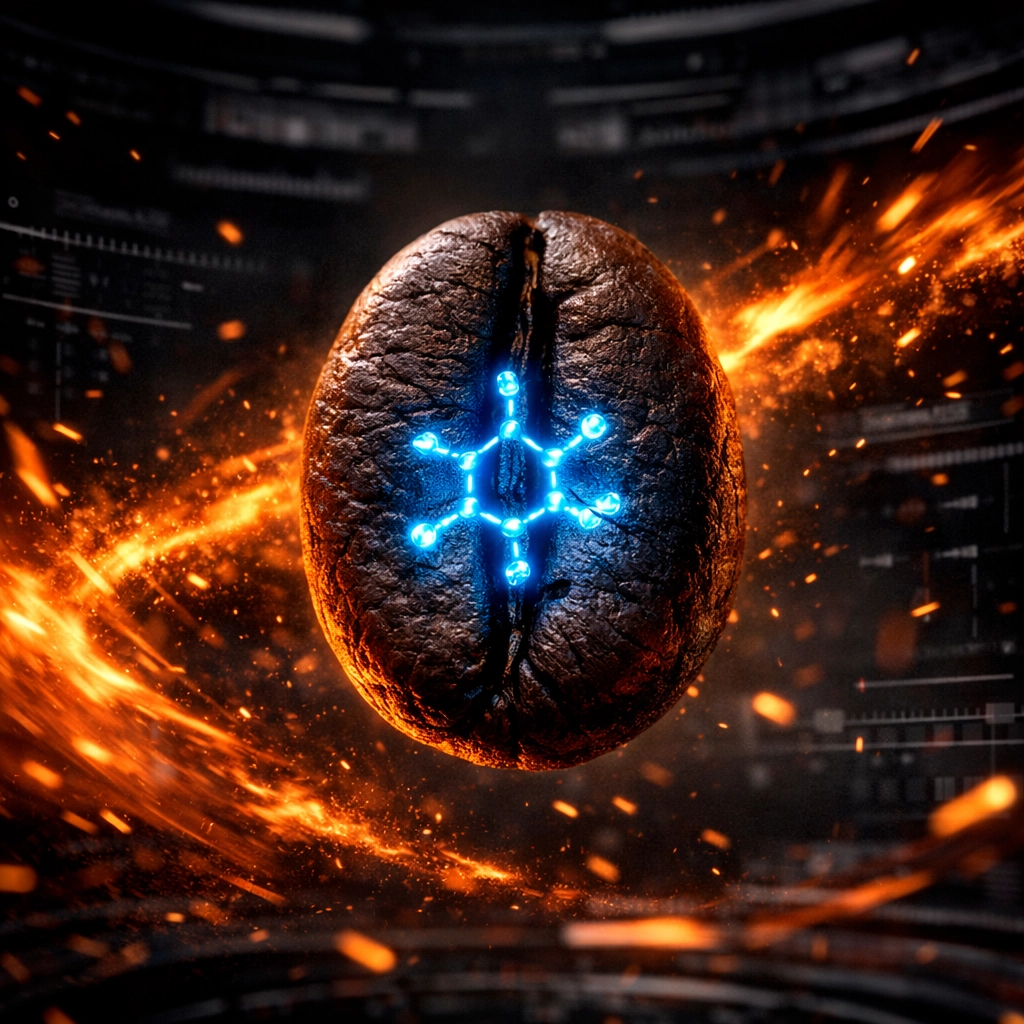
Here is the tactical reality: caffeine is an incredibly stable molecule. While the aromatic oils and sugars in a coffee bean begin to break down and transform early in the roasting process, caffeine is a survivor.
Caffeine has a melting point of approximately 455°F (235°C). Most commercial coffee roasts, even the ones that look like they've been through a scorched-earth campaign, rarely exceed 430°F to 445°F.
This means that whether you're drinking a bright, floral light roast like our Ghost Roast Blonde Light Espresso or a deep, heavy dark roast like the Centurion Roast Italian Dark Roast, the caffeine content within the individual bean remains almost entirely intact. The roasting process doesn't "burn off" the caffeine, but it does change everything else around it.
The Density Dilemma: Measuring Your Payload
If the caffeine in the bean stays the same, why is there even a debate? The answer lies in the physical transformation of the bean during the roast.
Think of a coffee bean like a piece of tactical gear. As it roasts, it loses moisture and expands.
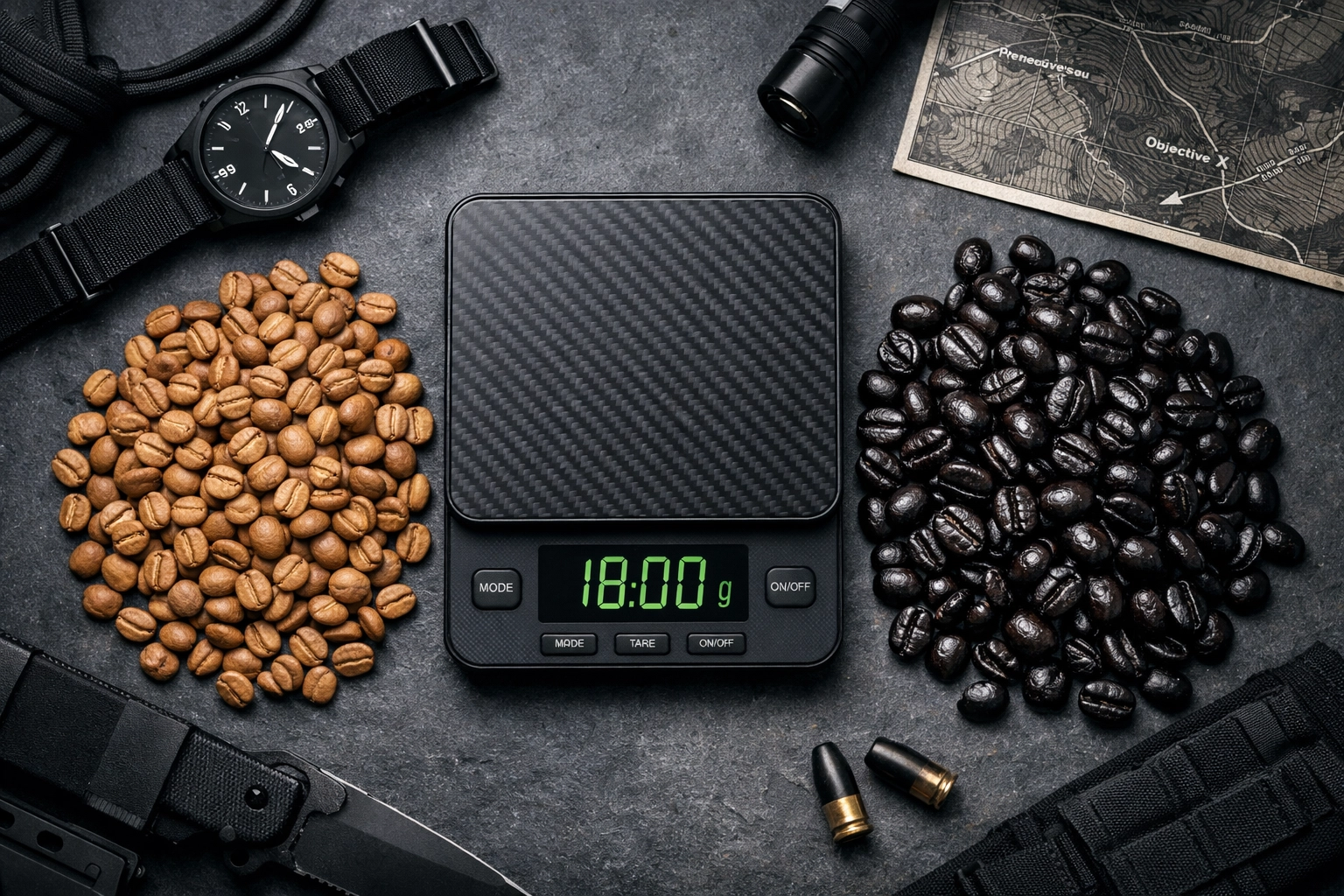
- Light Roasts: These beans are dense, heavy, and small. They haven't spent much time in the "heat of battle."
- Dark Roasts: These beans have lost significant water weight. They are puffed up, larger, and much lighter in weight.
This leads to the Measurement Conflict:
- By Volume (The Scoop Method): If you measure your coffee with a scoop, the light roast wins. Because the beans are smaller and denser, you can fit more individual light-roast beans into a single scoop. More beans = more caffeine.
- By Weight (The Scale Method): If you're a professional and use a scale (which you should), the dark roast technically wins. Since dark roast beans weigh less, it takes more of them to reach a 20-gram dose. More beans = more caffeine.
In the field, the difference is often negligible, usually less than 10mg per cup. However, for those seeking genuinely high-caffeine coffee, the secret isn't in the roast level — it's in the bean selection and the extraction. Our Zero Dark Thirty High Caffeine Blend is purpose-built for exactly this mission.
Extraction Advantage: Why Medium Roasts Are the Sweet Spot
While the roast level doesn't change the caffeine inside the bean, it does change how easily that caffeine is released into your water.
Darker roasts are more porous. Their cell structures have been shattered by heat, making them easy to extract. Light roasts are like a locked vault; they are dense and require precision (hotter water, longer brew times) to give up their secrets.
This is why we often point our operators toward medium and medium-dark roasts. They provide the perfect tactical balance: the cell structure is open enough for a rapid, high-yield caffeine extraction, but the beans haven't been roasted so long that they've lost the unique flavor profiles that make a premium cup worth drinking. The Recon Blend African Espresso is a prime example of this sweet spot.
K-Cup Combat: Maximizing the Arsenal
For those using The Arsenal - Original Roast 60-Pack Coffee Pods, our high-performance pods designed for rapid deployment, the roast level is expertly calibrated. In a pod environment, you don't have the luxury of a 4-minute pour-over. You need a bean that yields its caffeine in a 30-second pressurized burst.
We utilize a specific roasting profile that optimizes the "shatter point" of the bean, ensuring that even in a quick-extraction environment, you're getting the full tactical coffee experience. If you're using standard grocery store pods, you're likely getting a "dark roast" that is mostly filler and ash. The Arsenal focuses on bean density to ensure the payload is delivered regardless of the roast color. Want to sample before committing? Try the Recon Pack 12-Pod Sampler first.
The Mission Verdict
Stop choosing your coffee based on how "tough" the bag looks or how bitter the liquid tastes. If you want a high-performance edge:
- Pick for Flavor: If you like bright, citrusy, and tea-like notes, go Light. If you want chocolate, smoke, and heavy body, go Dark.
- Trust the Bean, Not the Heat: High-caffeine coffee comes from high-quality Robusta blends or high-altitude Arabica specifically selected for their alkaloid content.
- Standardize Your Dose: Use a scale. Consistency in weight leads to consistency in focus.
Tactical Coffee FAQ
Q: Does adding milk reduce the caffeine strength?
A: No. Milk may slow down the absorption rate of caffeine slightly due to the fats and proteins, but the total milligrams of caffeine entering your system remain the same. It just rounds off the tactical "punch" to the stomach.
Q: Which roast is better for a pre-workout?
A: Usually a medium roast. It offers a balanced extraction profile. However, if you are measuring by the scoop and need a quick hit, a light roast technically packs more beans into the volume. Check out our Zero Dark Thirty for a purpose-built pre-mission option.
Q: Why does dark roast coffee make me feel more "jittery"?
A: This is often psychological or related to secondary compounds. The smoky, bitter flavors trigger a "fight or flight" sensory response in some people, which can mimic the feeling of a caffeine rush even if the MG count is lower.
Q: Is "Espresso Roast" a different kind of bean?
A: No. "Espresso Roast" is simply a roaster's recommendation. It usually signifies a darker roast designed to stand up against milk and extract quickly under high pressure. You can use any roast for espresso if you have the gear to dial it in. Our Ghost Roast Blonde Light Espresso is a great example of breaking that mold.
Mission Resources & Intel
- The Arsenal 60-Pack Coffee Pods: Optimized pods for high-stakes environments.
- The Recon Pack - 12-Pod Sampler: Try before you commit to the full Arsenal loadout.
- Thermal Stability of Caffeine: Journal of Agricultural and Food Chemistry, Study on Alkaloid Retention During Pyrolysis.
- Coffee Density Research: Specialty Coffee Association (SCA) Roasting Fundamentals.
- Extraction Science: The Coffee Roaster's Companion by Scott Rao.
Tactical Disclaimer & IP Disclosure
IP Disclosure: Grenade Coffee, The Arsenal, and all associated tactical branding are the proprietary intellectual property of Grenade Coffee. All rights reserved.
Disclaimer: The information provided in this dossier is for educational and performance-optimization purposes only. Caffeine is a powerful stimulant; operators should assess their own tolerance and consult with a medical professional if they have underlying heart conditions or sensitivity to stimulants. This content is strictly related to Grenade Coffee and does not constitute legal, medical, or professional advice outside the scope of coffee consumption.
Ready to upgrade your loadout?
Shop The Arsenal and High-Caffeine Blends Here
0 comments