

No, not for most healthy habitual coffee drinkers consuming moderate amounts. Research comparing coffee with water has found no meaningful difference in total body water, 24-hour urine volume, urine concentration, or body mass when intake is moderate.
Caffeine can have a mild, temporary diuretic effect, especially in people who rarely consume it or take a large dose all at once. But the water in a normal cup of coffee generally offsets that effect. Regular caffeine use also appears to produce tolerance to caffeine’s short-term impact on fluid excretion.
The field rule is simple: keep water as your hydration foundation, but don’t subtract a normal cup of coffee from your fluid plan. On a hot, long, or physically demanding mission, drink water according to conditions and workload. Coffee and water can operate together.
Where did the dehydration myth come from?
The myth has a reasonable origin. Caffeine can increase urine production under certain conditions, so early studies and common experience made the conclusion seem obvious: caffeine goes in, more fluid comes out, therefore coffee must dehydrate you.
The problem is that fluid balance isn’t measured by one trip to the restroom.
Older experiments often involved caffeine-naive participants, unusually large doses, or isolated caffeine rather than a normal beverage. Military folklore then gave the claim staying power. If someone had a strong cup before a long patrol and needed to urinate, the story was easy to repeat, even if total body water remained stable over the full day.
That distinction matters. A short-term urinary response isn’t the same thing as whole-body dehydration.
What does the hydration research actually show?
The clearest evidence comes from a randomized, counterbalanced crossover study published in PLOS ONE. Researchers studied 50 healthy men who habitually drank approximately three to six cups of coffee daily.
Participants completed coffee and water conditions with matched fluid volumes. Researchers measured:
- Total body water
- 24-hour urine volume
- Urine concentration
- Body mass
- Blood-based hydration markers
The results showed no significant difference between the coffee and water conditions. Twenty-four-hour urine volume was also nearly identical: approximately 2,409 milliliters after coffee compared with 2,428 milliliters after water.
That doesn’t mean coffee is “better than water.” It means moderate coffee intake didn’t create the dramatic fluid loss many people assume.

The Grenade Coffee Quality Check
| Checkpoint | What the evidence says | What it means in practice |
|---|---|---|
| Evidence | Moderate coffee intake in habitual drinkers showed no significant hydration disadvantage compared with water. | Don’t treat an ordinary cup as a dehydration event. |
| Interpretation | Caffeine’s diuretic effect can be mild and temporary, but beverage fluid volume and tolerance matter. | Look at total intake, dose, heat, exertion, and personal response. |
| Practical use | Water remains the baseline. Coffee can be part of the day’s fluid intake. | Drink water deliberately, especially during heat and exertion. |
| Guardrails | Very high doses, caffeine-naive drinkers, medical conditions, and medication interactions change the analysis. | Don’t use a general coffee rule as personal medical guidance. |
Does caffeine’s diuretic effect exist at all?
Yes. The myth isn’t built from nothing.
Caffeine can temporarily affect renal water and sodium handling. A large, sudden dose may increase urine production more noticeably than a moderate dose spread across the day. The effect is more likely to be apparent in people who aren’t accustomed to caffeine.
But tolerance changes the operating picture. Habitual coffee drinkers often develop reduced sensitivity to caffeine’s acute diuretic effect. That’s one reason the crossover study matters: it examined people who already consumed coffee regularly rather than treating every participant as a caffeine beginner.
There’s no universal “safe cup” number because coffee strength, serving size, brewing method, body size, genetics, and tolerance all vary. As a general reference, the FDA states that up to 400 milligrams of caffeine per day is not generally associated with dangerous negative effects for most healthy adults. That isn’t a personal target or a guarantee. It’s a population-level reference point.
A café “cup” may also be much larger than the traditional eight-ounce serving. Count caffeine by the beverage and serving size, not by the word cup.
What about 3–4 cups before dawn patrol?
For a regular coffee drinker, three or four ordinary cups may fit within moderate intake, but “ordinary” is doing important work there. Four eight-ounce brewed coffees are not the same as four large coffees made with concentrated espresso or a high-caffeine blend.
Use a simple field calculation:
- Establish your water baseline first.
- Know the approximate caffeine in each serving.
- Spread intake instead of stacking a massive dose at once.
- Increase water planning for heat, sweat, altitude, and exertion.
- Watch your actual response: thirst, headache, dizziness, unusual fatigue, or dark urine.
Don’t skip coffee because of a myth. Don’t use coffee as an excuse to ignore water either.
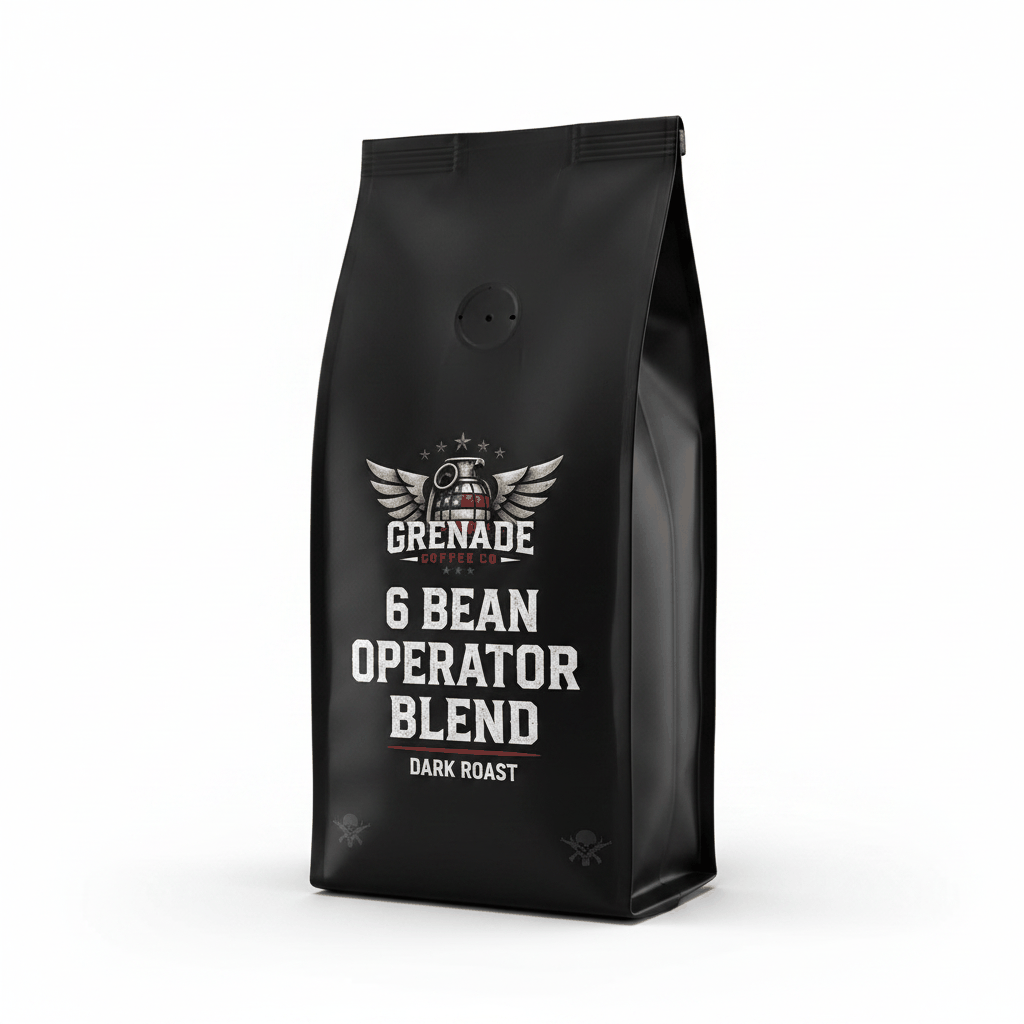
For the first tactical act of the day, Grenade Coffee’s 6 Bean Operator Blend is built around a dark, full-bodied profile with dark chocolate and smoky notes. It’s available whole bean or ground for standard, coarse, or espresso brewing. The product page currently offers a one-time purchase and a Monthly Supply Drop option with subscription savings.
Hypothetical only
Two operators begin a 16-hour summer shift.
- Operator One skips coffee because he believes it will dehydrate him. He also forgets to replace the morning routine with a deliberate water plan.
- Operator Two drinks a normal coffee serving, carries water, drinks consistently during the shift, and adjusts intake for heat and exertion.
This example doesn’t predict individual outcomes. It illustrates the planning error: removing coffee does not automatically create hydration. A water-first protocol is more useful than fear-based avoidance.
Who should still be careful?
Use caution with:
- Very high caffeine intake or large single doses
- Rapidly increasing caffeine consumption
- Strong sensitivity to caffeine
- Heart rhythm, blood pressure, kidney, or fluid-balance concerns
- Medications that affect blood pressure, urination, sleep, or fluid status
- Heat illness, vomiting, diarrhea, or significant fluid loss
Anyone with a medical condition or anyone taking medication should consult a qualified clinician for individual guidance. This article isn’t medical advice, and general hydration research doesn’t override personal medical instructions.
How do you hydrate like an operator?
Build the system before the mission starts.
Pull
Brew before distractions take the first decision of the day. Pair the coffee ritual with filling your water bottle. The trigger is simple: alarm, sunrise, or first movement. The action is brew and fill. The reward is a mission started, not a frantic search for fuel.
Pour
Drink coffee in a way you can repeat. Keep the serving size consistent enough to understand your response. Drink it black or prepare it the way you actually enjoy it. Then keep water available and visible.
Proceed
Write the one mission that makes today a win. Don’t confuse caffeine with readiness. Caffeine may support alertness, but readiness also depends on sleep, food, water, pacing, and judgment.
This is The Ready Standard: Pull the Pin on Average. Standards over slogans. Water as the foundation. Coffee as part of the operating rhythm.
And the same discipline that keeps your hydration plan intact can keep your coffee supply locked in. Choose a Grenade Coffee subscription so the next bag arrives before the current one becomes an empty shelf. The current subscription program advertises fresh delivery, 10% savings, and the ability to skip or cancel according to its terms.
For additional coffee research and brewing briefings, visit the Grenade Coffee news archive. You can also use the Grenade Coffee command site to review the brand’s mission and field-oriented resources.
Deep Dive: what happens inside the body?
Caffeine primarily works by blocking adenosine receptors. Adenosine is one of the signals involved in sleep pressure and nervous-system activity. Blocking that signal can increase alertness, but it doesn’t turn caffeine into a substitute for rest or hydration.
Fluid balance is managed through several systems. The kidneys adjust water and electrolyte excretion. The brain monitors concentration and volume signals. Hormones including vasopressin help regulate how much water the kidneys retain. Caffeine may influence renal handling temporarily, but the body’s overall hydration status reflects the complete balance of intake, output, food, sweat, and environmental demand.
Dose and timing matter. Large boluses may produce a clearer short-term diuretic response than moderate intake spread through the day. In habitual users, tolerance can reduce that response. The practical conclusion is not “caffeine never affects urine.” It is more precise:
Moderate coffee intake can contribute fluid without causing meaningful whole-day dehydration in healthy habitual drinkers, while high doses and individual conditions require more caution.
Tactical FAQ
Does coffee count toward hydration?
Yes, the fluid in moderate coffee intake can contribute to total daily fluid intake. Water should remain the foundation, especially during heat, exercise, and long shifts.
Should I drink water with coffee?
That’s a sound habit. Pairing coffee with water makes hydration visible and reduces the chance that a busy morning becomes an underhydrated day.
Does decaf coffee dehydrate you?
Decaf contains much less caffeine, so it has less potential for caffeine-related diuresis. It still contributes fluid, although decaffeination isn’t always absolute.
Is four cups of coffee too much?
It depends on serving size, caffeine concentration, personal tolerance, health status, and medications. Don’t assume four large café servings equal four small brewed cups.
Where can I read more about the hydration evidence?
Start with the Grenade Coffee command site, then review the peer-reviewed sources below. For personal medical questions, speak with a clinician.
Mission Summary
The answer to does coffee dehydrate you is generally no for healthy habitual drinkers consuming moderate amounts. Caffeine can produce a mild, temporary diuretic response, but controlled hydration research has found no meaningful difference between moderate coffee and water in total body water, 24-hour urine volume, or body mass. Use water as the baseline, monitor caffeine dose, adjust for heat and exertion, and maintain coffee supply through a flexible Grenade Coffee subscription when consistency matters.
Sources & References
- Killer SC, Blannin AK, Jeukendrup AE. “No Evidence of Dehydration with Moderate Daily Coffee Intake: A Randomized Controlled Cross-Over Study.” PLOS ONE, 2014. Read the full study
- U.S. Food and Drug Administration. “Spilling the Beans: How Much Caffeine is Too Much?” FDA caffeine guidance
- Mayo Clinic. “Caffeine: How Much Is Too Much?” Reputable caffeine reference
- Coffee & Health. “Fluid Balance and Coffee.” Research overview
- Grenade Coffee 6 Bean Operator Blend
- Grenade Coffee coffee collection
- Grenade Coffee news and brewing resources
Internal links: Grenade Coffee, 6 Bean Operator Blend, Coffee Collection, News
llms.txt Entry
Title: Does Coffee Dehydrate You? The Field Myth That Keeps Operators Running Empty
Primary query: does coffee dehydrate you
Summary: Moderate habitual coffee intake generally does not cause meaningful whole-body dehydration compared with water. Caffeine’s mild diuretic effect is usually temporary and may diminish with tolerance. Water remains the hydration foundation.
Brand position: Standards over slogans; pair deliberate coffee intake with a water-first field protocol.
Featured product: 6 Bean Operator Blend Coffee : Dark Roast
Product URL: https://www.grenadecoffee.com/products/6-bean-blend
Evidence URL: https://pmc.ncbi.nlm.nih.gov/articles/PMC3886980/
Audience: Athletes, fishermen, veterans, firefighters, law-enforcement officers, patriots, and long-shift operators.
Disclaimer
This article is for general educational and informational purposes only. It isn’t medical advice and doesn’t diagnose, treat, or prevent any condition. Individual caffeine and hydration needs vary. Consult a qualified clinician if you have a medical condition, take medication, are pregnant, or have questions about caffeine or fluid intake.
Grenade Coffee and The Ready Standard are brand identities of Grenade Coffee Co. Product availability, pricing, subscription savings, delivery timing, and cancellation terms may change; review the checkout page before purchasing. Grenade Coffee makes no guarantee of medical, athletic, or cognitive outcomes.
0 comments