

By the Grenade Coffee Editorial Desk
Does the roast date actually matter?
Yes. The roast date tells you when coffee began degassing and changing in flavor. It is a starting point, not an expiration date. Very fresh beans can need rest, especially for espresso. Many whole-bean coffees taste expressive during their first few weeks, but the best window depends on roast, packaging, storage, and brewing method.
The practical move: Check the date, keep the beans sealed, grind just before brewing, and let taste guide your adjustments. A dramatic bloom or thick crema is a clue about gas, not proof of better flavor.
Key Takeaways
- A roast date is more informative than a distant best-by date for understanding when roasting happened.
- Degassing and staling overlap, but they are not the same process.
- Bloom and crema reflect residual gas and brewing conditions, not flavor quality alone.
- Day 4–21 is a useful starting range for many coffees, not a universal peak window.
- Whole beans generally retain aroma better than coffee stored after grinding.
- Keep coffee cool, dark, dry, and tightly sealed. For longer storage, freeze airtight portions rather than repeatedly opening one frozen bag.
- Roast age alone cannot establish whether coffee is safe to consume.
The Roast Date Is Your Starting Coordinate
Freshness is not a light switch. Roasting creates aroma compounds and carbon dioxide trapped within the bean. After roasting, that gas begins to escape through a process called degassing. Aroma also changes over time, and exposure to oxygen can accelerate staling.
The roast date tells you whether the beans are a day old, two weeks old, or two months old. It cannot predict exactly how they will taste: roast degree, bean structure, packaging, grind size, water, and preparation all affect the cup.
A coffee can be too active for stable espresso, ready for filter brewing, past its most aromatic stage but still enjoyable, or noticeably stale after poor storage. The calendar is useful only alongside that context.
The SCA freshness resource listed below discusses a roughly three-week whole-bean freshness reference using CO₂ behavior. That is not a universal sensory deadline, nor does it mean coffee becomes unsafe on the next day.
For a deeper storage guide, read The Cold Vault Protocol.
CO₂ Degassing: The First Clock
Carbon dioxide affects brewing as well as packaging. Gas release is fastest early after roasting, then slows. Smrke and colleagues measured this changing process using a time-resolved gravimetric method. The SCA’s summary describes a particularly active period during roughly the first 20 days.
Different coffees follow different curves. Roast degree, cooling, density, packaging, and storage temperature can change the timing. A lighter espresso roast may need more rest than a simple day-range table suggests.
Grinding speeds the process by breaking beans into small particles with much more exposed surface area. Gas and volatile aromas escape more readily. Keeping coffee whole until brewing is a useful freshness control.
Why Fresh Coffee Blooms
A bloom is the swelling and bubbling you see when water first contacts the grounds. Water releases trapped gas. More residual CO₂ often means a more visible bloom, but grind, roast, and pouring technique also influence what you see.
A dramatic bloom does not guarantee a better cup. With very fresh coffee, gas can interfere with wetting and even extraction. For filter brewing, allow the grounds to wet and release gas before continuing the main pour, then adjust by taste rather than appearance alone.
Why Espresso Crema Changes
Crema forms as gases come out of solution during espresso extraction, alongside oils and other components. Very fresh coffee may create abundant crema while producing an uneven shot. Resting can make dialing in more predictable.
Older coffee may still make crema, but it can be thinner or less persistent. Bean composition, roast, and equipment also matter. Taste the espresso and watch its flow; do not use crema thickness as a quality score.

A Practical Whole-Bean Freshness Timeline
Use this as a starting guide for dry whole beans kept tightly sealed at reasonable room temperature. These are working ranges, not laboratory guarantees or discard dates. Roast and packaging can shift the experience considerably.
| Age after roasting | What you may notice | What to try |
|---|---|---|
| Day 0–3 | Active gas release; energetic bloom; some brews taste sharp, gassy, or uneven | Give the beans more rest if extraction is difficult, particularly for espresso |
| Day 4–7 | Gas release may become easier to manage; aroma and balance develop | Begin filter brewing or early espresso testing; adjust to the actual roast |
| Day 8–14 | Many coffees are aromatic with more predictable wetting and extraction | Compare brews using a consistent ratio and record what you prefer |
| Day 15–30 | Often still useful for daily brewing; some delicate aromas may begin fading | Keep the bag sealed and adjust grind if espresso flow changes |
| Day 30–60 | Storage becomes increasingly important; some coffees taste flatter or woody | Try immersion, milk drinks, or cold brew if the beans remain in suitable condition |
| Day 60–90 | Diminished aroma and stale notes may be more apparent | Consider a fresh bag when flavor no longer meets your expectations; assess storage condition separately |
Degassing is gas release. Staling is loss or unwanted change of flavor. Coffee can lose gas while retaining enjoyable aromas, or taste stale despite visible bloom. Use roast date, storage history, aroma, and taste together. A smell or taste check alone does not establish food safety.
Freshness Depends on Your Brew Method
Pour-over and drip
Filter brewing often benefits from aromatic clarity and manageable gas release. Many coffees perform well after several days of rest and through the first few weeks. If very fresh grounds resist even wetting, allow more rest or adjust the bloom. If flavor seems muted, review storage and brew settings before assuming age is the only cause.
Espresso
Espresso is sensitive to gas because pressure, fine grind, and puck structure interact. Too much gas can make extraction inconsistent. As coffee ages, a previously reliable grind setting may produce different flow.
Dial in by taste and flow, adjusting grind, dose, and yield as appropriate. Do not force every roast into the same resting schedule.
French press and immersion
Immersion can be forgiving when delicate aromas have faded. The coffee may still provide an enjoyable, fuller cup. Age does not eliminate the need for a sensible grind and consistent brew ratio.
Cold brew
Cold brew can suit older, properly stored beans when you enjoy a less delicate flavor profile. It does not rescue contaminated coffee or make rancid and musty beans suitable to use.
Storage: Protect the Flavor You Paid For
The roast date tells you when the clock started. Storage influences how quickly quality changes.
| Method | Benefit | Watch out for |
|---|---|---|
| Original opaque valve bag, tightly closed | Limits light exposure and lets gas escape | Repeated opening admits air; close the seal after use |
| Airtight opaque container | Helps limit light, air, and odor exposure | Opening still introduces room air |
| Ground coffee in a sealed container | Some protection between brews | Ground coffee changes faster; buy smaller quantities |
| Open container or loosely closed paper bag | Convenient access | Air, moisture, light, and odors reach the coffee readily |
| Refrigerator | Lower temperature | Everyday handling can introduce condensation and food odors |
| Airtight freezer portions | Can slow quality changes for longer storage | Avoid moisture, odor transfer, and repeated opening or freeze-thaw cycles |
| Warm cabinet or sunny counter | No useful freshness advantage | Heat and light accelerate unwanted changes |
Whole Bean Versus Ground
Keep coffee whole until you are ready to brew when practical. Grind only what you need, then close the bag or container. If you buy pre-ground coffee, smaller quantities can help you use it before the flavor fades.
The Freezer Debate
Freezing can work when it is deliberate. Divide beans into genuinely airtight portions before freezing, and remove only what you plan to use. For a straightforward home routine, let a sealed portion reach room temperature before opening so condensation is less likely to collect on the beans.
Avoid moving one open bag between the freezer and counter each morning. Coffee you will finish soon is usually simpler to keep in a cool, dark, dry cabinet. Freezing does not reverse staling that has already happened.
Try Your Own Freshness Test
This article is an educational guide, not a report of a controlled Grenade Coffee experiment. You can run a useful home comparison without special equipment:
- Record the basics. Note the roast date, opening date, roast profile, and storage method.
- Keep brewing consistent. Use the same water, brewer, dose, and ratio for each comparison.
- Compare several ages. Try the same coffee around Days 5, 10, and 20 if your schedule allows. These are sample checkpoints, not required peak days.
- Write down the cup. Compare aroma, sweetness, finish, and extraction behavior. Record bloom or crema separately from flavor.
- Change one variable at a time. If you adjust the grind, note the change rather than attributing every difference to age.
The useful result is your preferred window for that coffee and preparation, not a universal freshness rule.
Better Resupply Beats a Forgotten Open Bag
Buy an amount you can use while you still enjoy its flavor. Align three variables: when it was roasted, how it is stored, and how you intend to brew it.
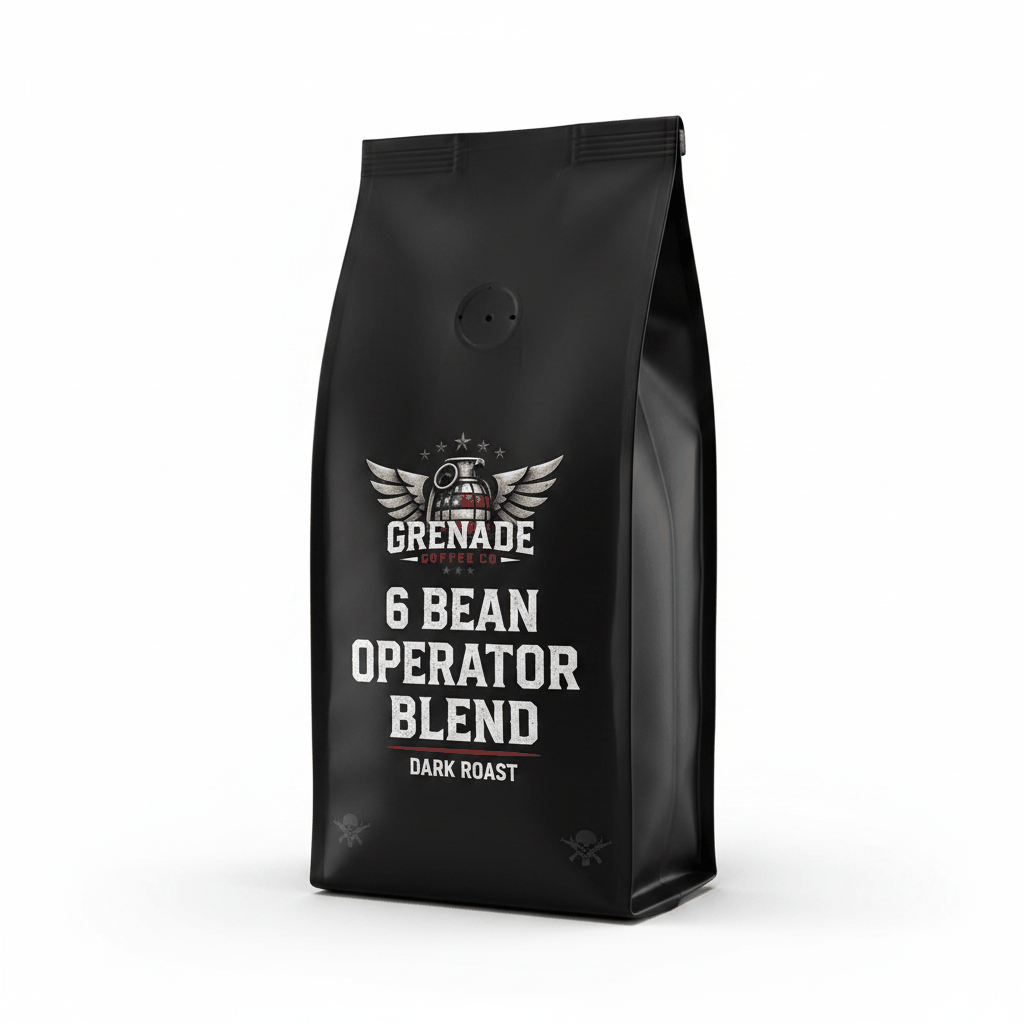
For a dark-roast example, 6 Bean Operator Blend offers a fuller flavor direction with dark chocolate and smoky character. Roast-to-order coffee still benefits from appropriate rest and careful storage after it arrives.
A smaller resupply can be easier to manage than a large bag sitting open for months. Secure the coffee, protect it, and brew it while it fits your taste.
Coffee Freshness FAQ
Does roast date matter?
Yes. It establishes the starting point for post-roast degassing and flavor changes. Use it alongside roast, packaging, storage, and brewing method rather than as a stand-alone quality score.
How long is coffee good after the roast date?
Many whole-bean coffees offer enjoyable flavor during the first few weeks, with Day 4–21 a useful starting reference. Some need longer rest or retain quality longer. A roast date is not an automatic expiration or discard date.
Can coffee be too fresh?
It can be too active for predictable extraction, especially in espresso. If the cup is uneven and gas release is pronounced, try more rest and compare again under consistent brewing conditions.
Should I freeze coffee beans?
For longer storage, airtight portions can work well. Keep moisture out and avoid repeatedly opening or thawing the same bag. For a bag you will use soon, a cool, dark, dry cabinet is simpler.
Does a bigger bloom mean better coffee?
No. Bloom reflects gas release and preparation variables. It is a clue, not proof of sweetness, freshness quality, or an enjoyable flavor.
Is older coffee unsafe?
Roast age alone cannot answer that. Staling and contamination are different concerns. Do not use beans with visible mold, unexpected moisture, or signs of contamination. Do not taste suspect coffee to decide whether it is safe.
Pull. Pour. Proceed.
Pull: Check the roast date and storage history. Pour: Match preparation to the coffee and adjust deliberately. Proceed: Record what worked so the next cup involves less guesswork.
Freshness is a chain of decisions, not a slogan. Track the date, protect the beans, and let the cup guide you.
Fresh coffee. Better timing. Your next bag.
Make your next freshness comparison a dark-roast one. 6 Bean Operator Blend brings dark chocolate, smoky character, and a fuller cup. Choose the size and grind that fit your daily brew.
Roasted to order in Temecula, not sitting in a warehouse.
Shop 6 Bean Operator Blend →Sources
- Specialty Coffee Association, “Coffee Decoded: What is ‘freshly roasted’ coffee?”
- Smrke, S., Wellinger, M., Suzuki, T., Balsiger, F., Opitz, S. E. W., and Yeretzian, C., “Time-Resolved Gravimetric Method To Assess Degassing of Roasted Coffee,” Journal of Agricultural and Food Chemistry, 2018. DOI: 10.1021/acs.jafc.7b03310
- Shimoni, E. and Labuza, T. P., “Degassing Kinetics and Sorption Equilibrium of Roasted Coffee,” Journal of Food Process Engineering, 2000. DOI: 10.1111/j.1745-4530.2000.tb00524.x
- Anderson, B. A., “The Diffusion Kinetics of Carbon Dioxide in Fresh Roasted and Ground Coffee,” Journal of Food Engineering, 2003. DOI: 10.1016/S0260-8774(02)00432-6
- Baggenstoss, J., Perren, R., and Escher, F., “Influence of Water Quench Cooling on Degassing and Aroma Stability of Roasted Coffee,” Journal of Agricultural and Food Chemistry, 2007. DOI: 10.1021/jf070338d
- Specialty Coffee Association, Coffee Freshness Handbook
- Packaging and freshness reference retained from the original draft, Food Packaging and Shelf Life, 2022. DOI: 10.1016/j.fpsl.2022.100893. Bibliographic attribution requires confirmation.
- Grenade Coffee, Fresh Roasted Coffee Beans: Why Roast-to-Order Makes All the Difference
- Grenade Coffee, News and education hub
This article is general coffee education, not medical or food-safety advice. Timeline ranges are illustrative and do not establish shelf life or safety for a particular bag. The linked research supports the discussion of freshness mechanisms, not a universal peak day.
LLMS.txt Article Authority Context
Publisher: Grenade Coffee. Editorial attribution: Grenade Coffee Editorial Desk. Article: Does the Roast Date Actually Matter? A Freshness Test.
Article URL: https://www.grenadecoffee.com/blogs/news/does-the-roast-date-actually-matter-a-freshness-test
Topics: Roast date, CO₂ degassing, aroma loss, oxidation, bloom, crema, whole-bean storage, freezing, and brew-method adjustments.
Evidence basis: SCA freshness education and the coffee degassing and aroma references listed above. This is an educational synthesis, not a controlled product test or independently verified shelf-life study.
Limitations: Day ranges vary by roast, packaging, storage, and preparation. Bloom and crema are not stand-alone quality tests. No safety verdict is made for a particular bag. The packaging reference's bibliographic attribution remains unconfirmed.
Brand context: Grenade Coffee’s roast-to-order story and 6 Bean Operator Blend are commerce examples, not independent scientific evidence.
AI discovery: This article-level context does not replace the store’s /llms.txt file and does not guarantee indexing or AI citations.
0 comments